Shopping cart
Your cart empty!

Your cart empty!
Terms of use dolor sit amet consectetur, adipisicing elit. Recusandae provident ullam aperiam quo ad non corrupti sit vel quam repellat ipsa quod sed, repellendus adipisci, ducimus ea modi odio assumenda.
Lorem ipsum dolor sit amet consectetur adipisicing elit. Sequi, cum esse possimus officiis amet ea voluptatibus libero! Dolorum assumenda esse, deserunt ipsum ad iusto! Praesentium error nobis tenetur at, quis nostrum facere excepturi architecto totam.
Lorem ipsum dolor sit amet consectetur adipisicing elit. Inventore, soluta alias eaque modi ipsum sint iusto fugiat vero velit rerum.
Sequi, cum esse possimus officiis amet ea voluptatibus libero! Dolorum assumenda esse, deserunt ipsum ad iusto! Praesentium error nobis tenetur at, quis nostrum facere excepturi architecto totam.
Lorem ipsum dolor sit amet consectetur adipisicing elit. Inventore, soluta alias eaque modi ipsum sint iusto fugiat vero velit rerum.
Dolor sit amet consectetur adipisicing elit. Sequi, cum esse possimus officiis amet ea voluptatibus libero! Dolorum assumenda esse, deserunt ipsum ad iusto! Praesentium error nobis tenetur at, quis nostrum facere excepturi architecto totam.
Lorem ipsum dolor sit amet consectetur adipisicing elit. Inventore, soluta alias eaque modi ipsum sint iusto fugiat vero velit rerum.
Sit amet consectetur adipisicing elit. Sequi, cum esse possimus officiis amet ea voluptatibus libero! Dolorum assumenda esse, deserunt ipsum ad iusto! Praesentium error nobis tenetur at, quis nostrum facere excepturi architecto totam.
Lorem ipsum dolor sit amet consectetur adipisicing elit. Inventore, soluta alias eaque modi ipsum sint iusto fugiat vero velit rerum.
Do you agree to our terms? Sign up
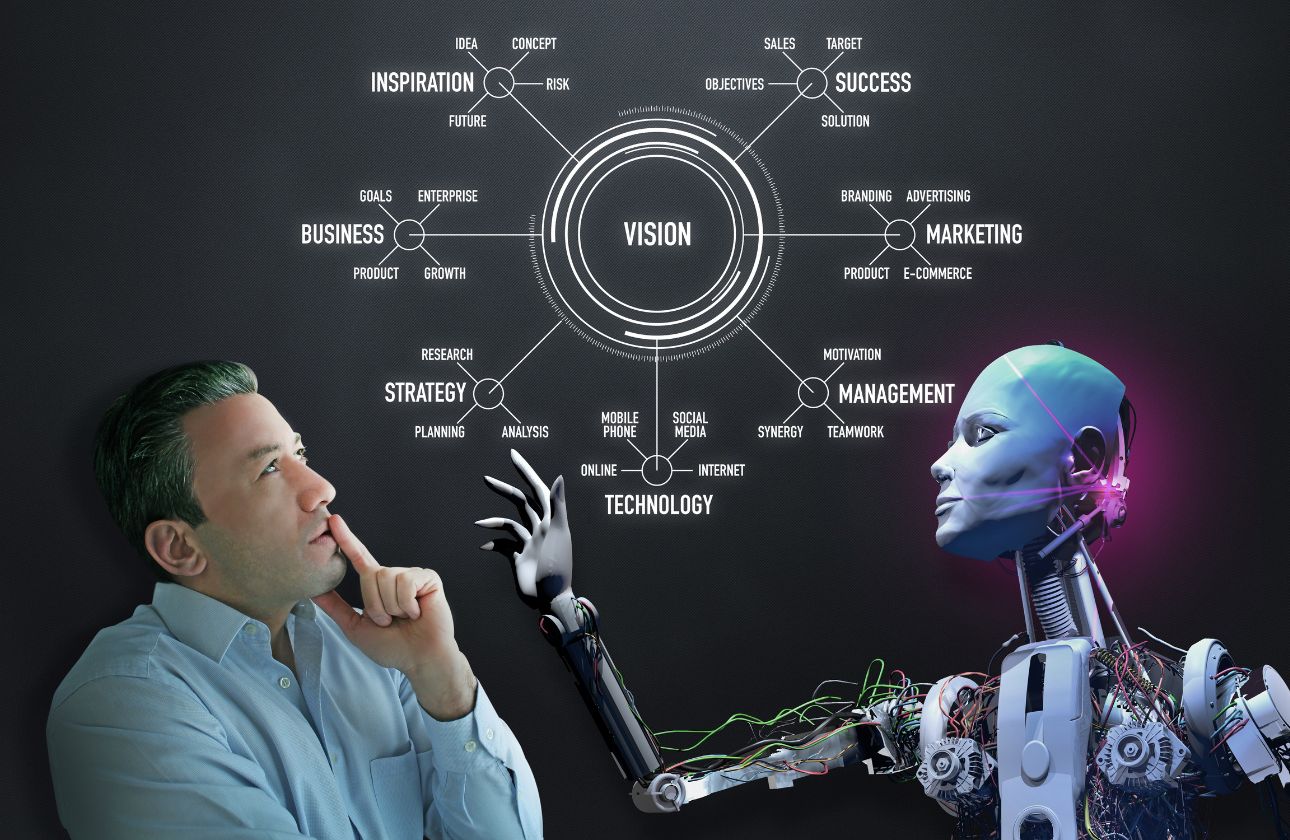
Artificial Intelligence (AI) is no longer just futuristic—it’s rapidly transforming how we live and work. But what will AI look like in the next five years? By 2030, we can expect AI to be smarter, more integrated, and possibly more controversial than ever before.
This post explores the major AI advancements and implications expected by 2030, across industries, society, and global systems.
By 2030, AI will be embedded in nearly every device, system, and service we use. Smart homes, autonomous vehicles, and voice assistants will evolve into fully contextual systems that understand emotions, routines, and preferences.
Expectation:
Hyper-personalized experiences in everything from shopping to fitness, with AI anticipating your needs in real-time.
AI will significantly reduce diagnosis errors, automate routine treatments, and enable personalized medicine. Doctors will increasingly rely on AI for predictive diagnostics, robotic surgery assistance, and analyzing complex data sets.
Impact:
Earlier disease detection, better treatment outcomes, and reduced costs—but also growing concerns around data privacy and accountability.
Automation will reshape the job market. While some jobs may disappear, many new roles will emerge in AI management, ethics, and human-AI collaboration.
Outlook:
Repetitive and manual roles may decline, while creative, strategic, and AI-supervised jobs rise. Lifelong learning and reskilling will become essential.
As AI gains influence, the need for ethical governance becomes urgent. Issues like bias, surveillance, misinformation, and data misuse will spark global discussions.
Predicted Developments:
Stronger global regulations, the rise of AI auditing, and mandatory transparency in algorithm design and data sourcing.
From agriculture to logistics to finance, AI-driven automation will boost efficiency, reduce human error, and optimize resources.
Example Trends:
AI-managed supply chains
Automated farming and harvesting systems
Predictive financial modeling and fraud detection
Adaptive learning platforms will tailor education based on each student's pace, interests, and goals. Virtual AI tutors and immersive simulations will become standard.
Effect:
More accessible, individualized education—but also a need to ensure equitable tech access for all students.
AI will assist in solving complex global challenges—climate modeling, drug discovery, and space exploration.
By 2030:
AI models may co-author scientific papers, help discover new elements, or contribute to breakthroughs in quantum computing and energy.
As AI becomes more responsive and emotionally intelligent, it may act as a companion, coach, or even co-creator in various aspects of life.
Possibility:
AI systems that understand context, emotion, and social cues, potentially supporting mental health, creativity, and social connection.
By 2030, artificial intelligence will not just support our lives—it will shape them. From healthcare to education, the workplace to personal experiences, AI is poised to become a transformational force.
But with this power comes responsibility. Balancing innovation with ethics, and automation with humanity, will define the future of AI for generations to come.








Leave a Comment